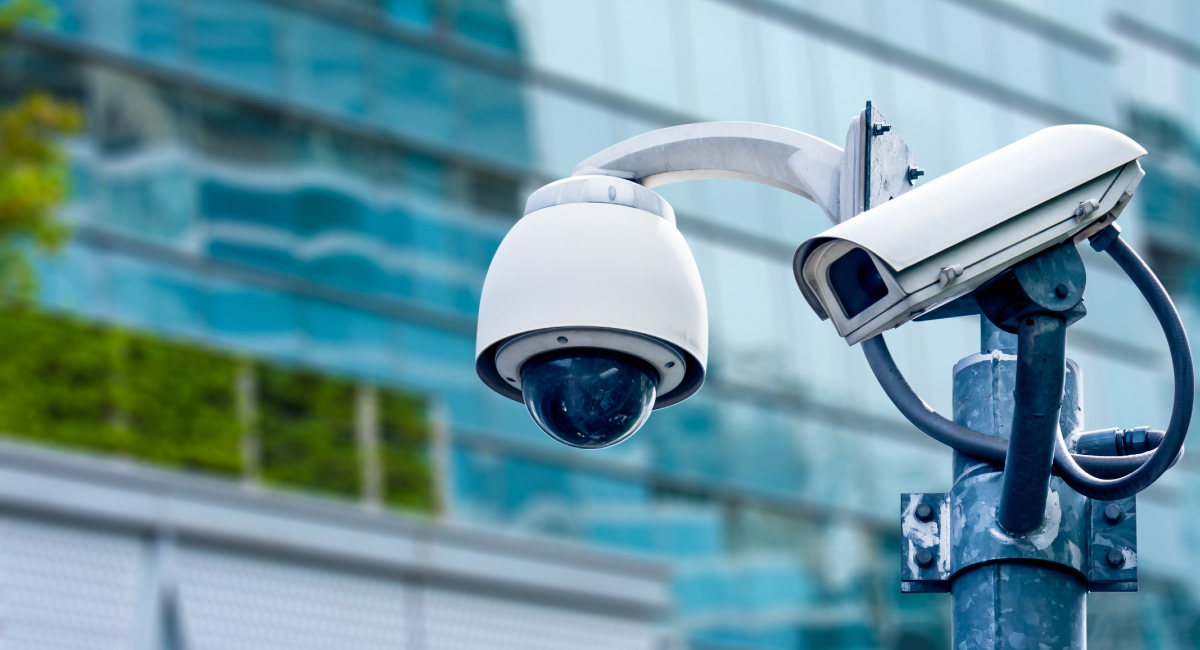
Closed-Circuit Television (CCTV) systems have become an important part of security infrastructure for government offices, public institutions, hospitals, schools, transport facilities and other public assets.
However, deploying CCTV effectively requires more than purchasing cameras and installing them around a facility.
Government institutions need to consider the purpose of the surveillance system, areas that require coverage, camera specifications, network infrastructure, recording capacity, power availability, data protection, access control, maintenance and future expansion.
A properly planned CCTV system should support the institution's security objectives while also protecting the privacy and security of the people whose images are captured.
In Nigeria, this is particularly important because surveillance cameras can involve the processing of personal data. The Nigeria Data Protection Commission (NDPC) identifies deployment of surveillance cameras in places accessible to members of the public as an activity that may require a Data Protection Impact Assessment under its applicable guidance.
1. Define the Purpose of the CCTV System
Before selecting equipment, an institution should establish why the CCTV system is being deployed.
Possible objectives include:
Protecting staff and visitors
Monitoring entrances and exits
Protecting government property
Monitoring parking areas
Supporting incident investigation
Monitoring restricted areas
Improving facility security
Monitoring public-facing facilities
Supporting existing security personnel
Protecting critical infrastructure
The purpose of the system should influence the camera locations, specifications, recording requirements and monitoring arrangements.
A system designed for general facility monitoring may have very different requirements from one intended to monitor a large perimeter or critical infrastructure site.
2. Conduct a Proper Site Assessment
A site assessment should be carried out before installation.
The assessment should examine:
Building layout
Entrances and exits
Perimeter boundaries
Parking areas
Corridors
Reception areas
Stairways
Storage areas
Restricted zones
Lighting conditions
Existing network infrastructure
Power availability
Existing security systems
Potential camera mounting locations
The objective is to understand the facility before designing the surveillance system.
Without proper assessment, cameras may be installed in locations that provide poor visibility, create blind spots or make future maintenance difficult.
3. Identify Critical Areas and Security Priorities
Not every part of a facility necessarily requires the same level of surveillance.
Institutions should identify areas that require priority coverage.
These may include:
Main entrances
Staff entrances
Vehicle gates
Reception areas
Perimeter boundaries
Car parks
Cash-handling areas
Server rooms
Records rooms
Warehouses
Equipment rooms
Restricted offices
High-value asset locations
Camera placement should be based on security requirements rather than simply installing an equal number of cameras in every area.
4. Select the Right Camera Types
Different locations may require different camera types.
Common CCTV options include:
Dome Cameras
Often used indoors and in locations where a compact camera design is desirable.
Bullet Cameras
Commonly used for outdoor areas and perimeter monitoring.
PTZ Cameras
Pan-Tilt-Zoom cameras can provide remotely controlled movement and zoom capabilities and may be useful for larger areas requiring active monitoring.
IP Cameras
IP cameras transmit video over a network and can integrate with network infrastructure and Network Video Recorders.
Thermal Cameras
For specialized applications, thermal cameras can detect heat signatures and may be useful in certain perimeter or low-visibility environments.
The appropriate camera should be selected based on the actual security requirement, environmental conditions and coverage objectives.
5. Consider Image Quality
Camera resolution should be selected according to what the institution needs to identify or monitor.
For example, a camera monitoring a wide parking area may have different requirements from a camera positioned at a controlled entrance where identifying individuals or vehicle details is important.
Other factors to consider include:
Resolution
Lens type
Field of view
Optical zoom
Low-light performance
Wide Dynamic Range
Infrared capability
Frame rate
Image compression
Weather resistance
Higher resolution alone does not guarantee better surveillance. Camera positioning, lighting, lens selection and recording quality are equally important.
6. Plan the CCTV Network Infrastructure
Modern IP CCTV systems depend heavily on network infrastructure.
A large deployment may require:
Network switches
Structured cabling
Fibre links
Network racks
Patch panels
PoE switches
Routers
Network segmentation
Wireless links where appropriate
Network monitoring
Power over Ethernet (PoE) can allow compatible cameras to receive power and network connectivity through a single Ethernet cable.
For larger government facilities or multi-building campuses, fibre optic links may be considered for inter-building connectivity.
The CCTV network should be designed as part of the wider ICT infrastructure rather than treated as an isolated installation.
7. Determine Recording and Storage Requirements
A CCTV system is only useful if important footage can be recorded and retrieved when required.
Institutions should determine:
Number of cameras
Camera resolution
Recording quality
Recording schedule
Motion-based recording requirements
Number of days footage should be retained
Storage capacity
Backup requirements
Access requirements
Storage requirements can increase significantly as camera numbers and image quality increase.
A proper storage calculation should therefore be performed before equipment is purchased.
8. Plan for Reliable Power
CCTV equipment requires dependable power.
Government institutions should consider what happens when the public electricity supply fails.
Depending on the facility, the system may require:
UPS systems
Inverters
Battery backup
Generator integration
Solar power
Surge protection
Power distribution systems
For remote facilities or locations with unreliable electricity, solar-powered CCTV can provide an alternative approach.
A solar CCTV system can combine solar panels, battery storage, cameras, communication equipment and recording or remote monitoring infrastructure.
9. Consider Data Protection and Privacy
CCTV footage can contain identifiable information about people.
Government institutions therefore need to consider how surveillance footage is collected, accessed, stored, retained and eventually deleted.
The Nigeria Data Protection Act 2023 establishes the legal framework for protecting personal data in Nigeria, while the NDPC is responsible for implementing the Act. The Commission's guidance emphasizes principles including lawful and transparent processing, purpose limitation, data minimization, storage limitation and appropriate security.
Institutions should therefore consider:
The purpose of surveillance
Appropriate camera placement
Who can access recordings
How footage is protected
How long footage is retained
How footage is securely deleted
Whether privacy notices are required
Whether a Data Protection Impact Assessment is appropriate or required
How requests concerning personal data will be handled
Privacy should be considered during system design rather than after installation.
10. Control Access to CCTV Footage
Not everyone in an institution should automatically have access to recorded footage.
Access should be controlled according to job responsibilities.
Possible access levels may include:
Security operators
Security supervisors
ICT administrators
Authorized management
Investigative personnel
System administrators
The CCTV platform should support appropriate authentication and access controls.
Where possible, activities involving footage should also be logged so that the institution can determine who accessed or handled recordings.
11. Protect the CCTV System from Cyber Threats
Network-connected cameras are themselves technology systems and should be protected.
Institutions should consider:
Strong administrator credentials
Secure configuration
Firmware updates
Network segmentation
Firewall protection
Restricted remote access
User access controls
Secure communication
Regular monitoring
Backup and recovery procedures
A poorly secured CCTV network can introduce additional risks into an organization's ICT environment.
CCTV security should therefore be coordinated with the institution's broader cybersecurity and ICT policies.
12. Consider Monitoring and Control Rooms
Installing cameras is only one part of a surveillance solution.
Institutions should determine where monitoring will take place and who will operate the system.
A control room may include:
Monitoring screens
Video management software
NVR servers
Network equipment
Operator workstations
Communication systems
UPS systems
Access control
Environmental monitoring
For larger facilities, multiple displays can be used to monitor different areas or camera groups.
The institution should also establish procedures for responding to incidents detected through the system.
13. Integrate CCTV With Other Security Systems
CCTV can become more useful when integrated with other security infrastructure.
Depending on the facility, integration may include:
CCTV + Access Control + Alarm Systems + Intercom + ICT Network + Solar/Backup Power
For example, an access control event could be reviewed alongside corresponding CCTV footage.
Similarly, CCTV systems can be connected to a facility's wider network and monitored from an authorized security control centre.
14. Consider Remote Monitoring Carefully
Some institutions may require authorized personnel to monitor cameras remotely.
Remote access can be useful for facilities with:
Multiple locations
Remote sites
Large campuses
Regional offices
Critical infrastructure
However, remote access should be designed securely.
Institutions should consider authentication, encrypted connections, access permissions, network security and monitoring of remote sessions.
Convenience should not come at the expense of security.
15. Plan for Future Expansion
Government facilities can grow over time.
Additional buildings, offices, gates, departments and security requirements may create the need for more cameras.
The original system should therefore allow for reasonable expansion.
Infrastructure planning should consider:
Spare network capacity
Additional PoE capacity
Storage expansion
Additional monitoring screens
Additional recording capacity
Network bandwidth
Power capacity
Future camera locations
Planning for expansion can reduce the cost and disruption associated with major future upgrades.
16. Establish a Maintenance Plan
CCTV systems require ongoing maintenance.
A maintenance plan may include:
Camera inspection
Lens cleaning
Cable inspection
Network testing
Storage health checks
NVR inspection
Firmware updates
UPS testing
Power system inspection
Camera repositioning
Fault diagnosis
Recording verification
Outdoor cameras may require more frequent physical inspection because of dust, weather and environmental conditions.
An institution should also know who to contact when a camera or recording system fails.
17. Train Security and ICT Personnel
A technically good CCTV installation can still underperform if users do not know how to operate it.
Training should cover:
System operation
Live monitoring
Searching recorded footage
Exporting authorized footage
User management
Basic troubleshooting
Incident reporting
Evidence handling
Data protection responsibilities
System security
ICT personnel may also require additional training on network configuration, system maintenance and cybersecurity.
18. Document the Installation
Proper documentation is important for government and institutional projects.
Documentation can include:
Camera layout
Network diagrams
Cable routes
Camera identification numbers
Equipment inventory
IP address information
NVR configuration
Storage specifications
Warranty information
Maintenance schedule
User access information
System handover documentation
Good documentation makes future maintenance and expansion easier.
19. Consider Total Cost of Ownership
The initial purchase price should not be the only consideration.
Institutions should consider the complete lifecycle cost, including:
Equipment
Installation
Network infrastructure
Storage
Power
Software
Licensing where applicable
Maintenance
Replacement components
Training
Future expansion
A system that appears inexpensive during installation may become expensive if it requires frequent repairs or cannot accommodate future requirements.
20. Use a Proper Implementation Process
A professional CCTV deployment can follow a structured process:
Assessment → Security Planning → Camera Design → Network Design → Equipment Selection → Installation → Configuration → Testing → Training → Handover → Maintenance
Each stage contributes to the reliability of the final system.
Testing should confirm that cameras provide the required coverage, recording works correctly, storage is adequate, network connectivity is stable and authorized personnel can retrieve footage.
CCTV Should Be Part of a Wider Security Strategy
CCTV should not be treated as a replacement for physical security personnel, access control, lighting, alarms or established security procedures.
Instead, it should form part of a broader security strategy.
For example:
Security Personnel + CCTV + Access Control + Lighting + Alarm Systems + ICT Infrastructure + Reliable Power
This integrated approach can provide a stronger operational framework than cameras alone.
Why Government Institutions Need Proper CCTV Planning
Government facilities can vary significantly in size, function and security requirements.
A small administrative office may require a relatively straightforward CCTV system, while a large government complex, hospital, university, transportation facility or critical infrastructure site may require multiple buildings, centralized monitoring, extensive networking, backup power and carefully controlled access.
The solution should therefore be based on the facility's actual requirements.
How YasYum Ltd Can Help
YasYum Ltd provides CCTV and electronic security solutions as part of its wider Integrated Technology, Security & Renewable Energy Solutions offering.
Our CCTV capability can cover:
CCTV site assessment
Surveillance system design
Camera installation
IP CCTV infrastructure
NVR/DVR deployment
Network infrastructure
CCTV control rooms
Remote monitoring solutions
Access control integration
Solar-powered CCTV
Backup power integration
CCTV maintenance and support
System documentation and training
Our integrated approach allows CCTV to be considered alongside ICT infrastructure, networking, renewable energy and technical maintenance.
This is particularly useful for institutions that need security infrastructure capable of operating reliably within their wider technology environment.
Conclusion
Deploying CCTV in a government institution is a significant infrastructure decision. The objective should not simply be to install as many cameras as possible.
A successful deployment begins with understanding the security objectives, assessing the facility, designing appropriate coverage, selecting suitable equipment, providing reliable network and power infrastructure, protecting recorded information and establishing a proper maintenance and operational framework.
Data protection should also be considered from the beginning. The NDPC's current framework emphasizes responsible processing, appropriate security and accountability for personal data, while its guidance specifically recognizes surveillance-camera deployments as an area that may require additional privacy assessment.
For government institutions planning a new CCTV installation or upgrading an existing surveillance system, a professional site assessment and system design should come before equipment procurement.
YasYum Ltd can assess your facility, design the appropriate CCTV infrastructure and integrate surveillance with networking, security and renewable energy systems.
Need a CCTV assessment or upgrade for your institution?
Contact YasYum Ltd to discuss your requirements.
YASYUM LTD
Integrated Technology, Security & Renewable Energy Solutions
Suite 38, Dumec Plaza, Area 1, Section 1, Abuja, FCT, Nigeria
Phone: 08036202908, 08028720549
Email: info@yasyum.com
Website: yasyum.com
Tags


Discussion
Comments
No comments yet.
Be the first to share your thoughts on this article.
Leave a comment
Join the discussion
Your email won't be published. Comments are reviewed before appearing.