Case Study: IP CCTV Surveillance & Monitoring System
IP CCTV Surveillance & Electronic Security Infrastructure
Overview
About this project.
The Challenge
The facility required a more structured approach to video surveillance and security monitoring.
A modern surveillance system needs to provide more than cameras mounted around a building. Cameras need reliable network connectivity, appropriate recording infrastructure, sufficient storage, stable power and controlled access to recorded footage.
The project therefore required an IP-based surveillance infrastructure that could support centralized monitoring while allowing room for future expansion.
Key requirements included:
Improved visibility across important areas
Centralized video monitoring
Reliable video recording and storage
Network connectivity for IP cameras
Night-time surveillance capability
Authorized access to recorded footage
A scalable infrastructure for additional cameras
Reliable infrastructure for continuous operation
Easier maintenance and fault identification
Our Approach
YasYum approached the project as an integrated security and network infrastructure deployment.
Rather than treating the cameras as standalone devices, we considered the relationship between the cameras, network, recording system, storage, monitoring workstation and power infrastructure.
The project followed a structured process:
Site Assessment → Surveillance Planning → Network Design → Equipment Installation → Configuration → Testing → Training & Handover
This approach helped ensure that the deployed system matched the facility's physical layout and operational requirements.
The Solution
YasYum designed and deployed an IP CCTV surveillance architecture consisting of network cameras, PoE infrastructure, structured cabling, recording equipment and monitoring systems.
IP CCTV Cameras
The system can utilize different camera types depending on the location and surveillance requirement, including:
Indoor dome cameras
Outdoor bullet cameras
PTZ cameras
High-resolution cameras
Infrared/night-vision cameras
Low-light cameras
Weather-resistant cameras
Camera positioning was considered around entrances, exits, circulation areas, perimeter locations and other areas requiring surveillance.
Network Infrastructure
The IP cameras were connected through network infrastructure using appropriate PoE switching and structured cabling.
The basic architecture follows:
IP Cameras → PoE Switches → Network Infrastructure → NVR → Storage → Monitoring Workstation
This creates a centralized surveillance environment rather than a collection of disconnected cameras.
Network Video Recording
The NVR provides centralized video recording and management.
Depending on configuration, authorized users can perform functions such as:
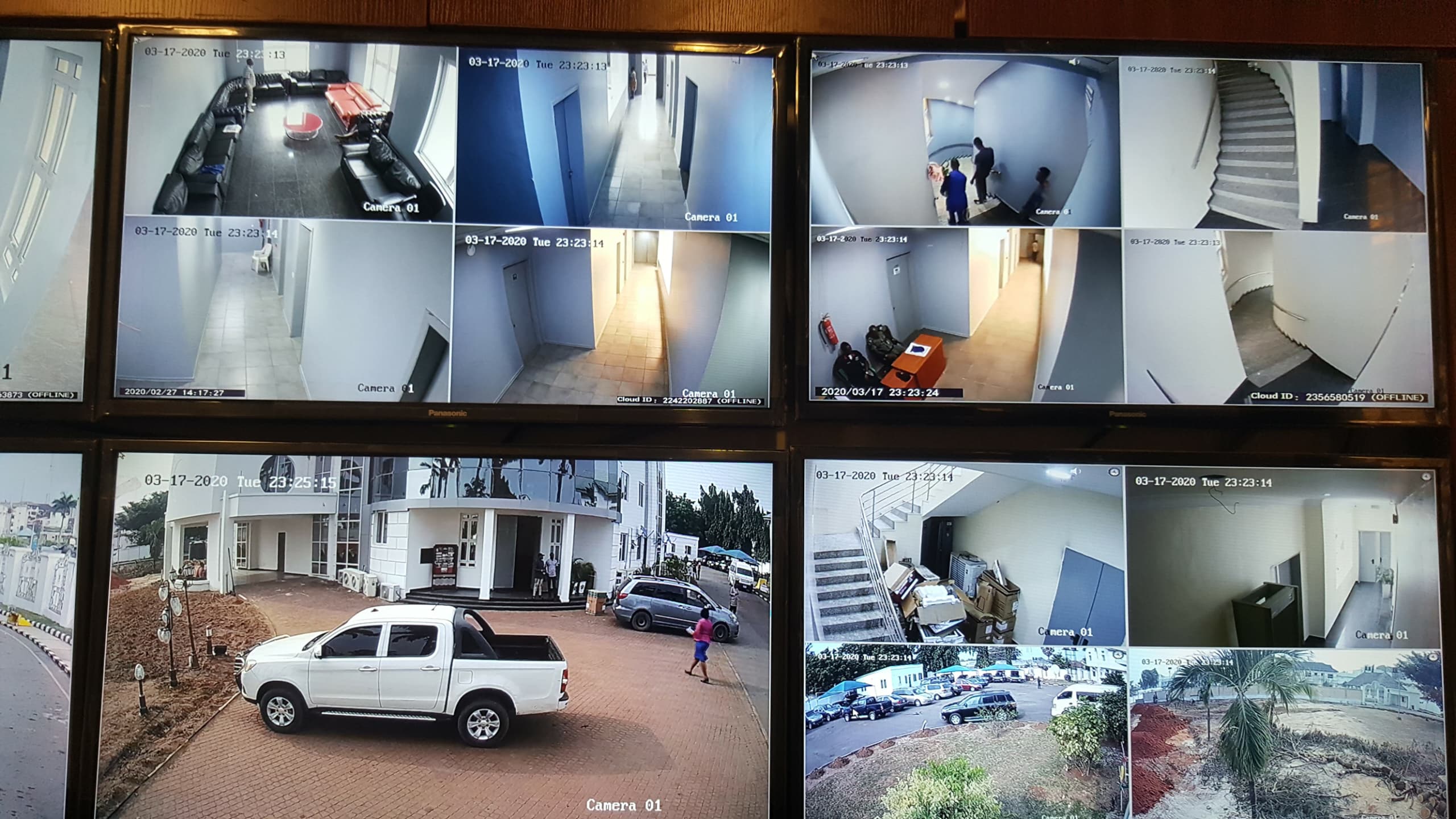
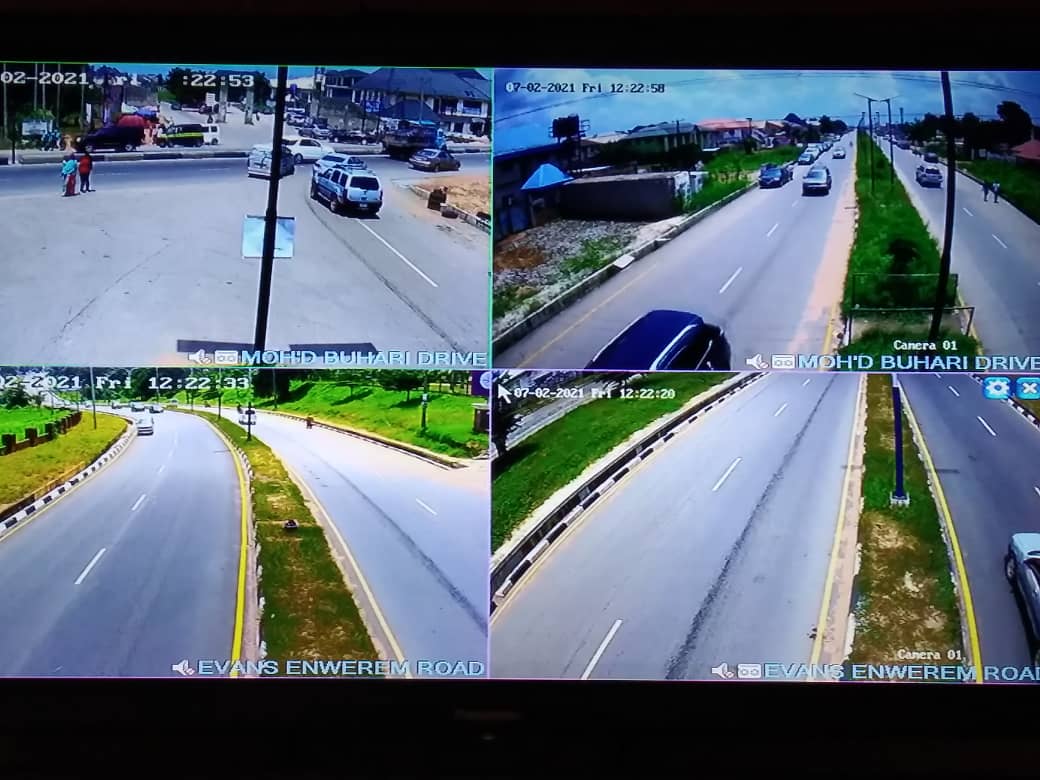
Live viewing
Recorded-video playback
Event search
Camera status monitoring
Video export
User access management
Storage capacity can be designed according to the number of cameras, resolution, recording schedule and required retention period.
Security Considerations
Because CCTV systems process video information and may be connected to organizational networks, security was considered as part of the deployment.
The system can incorporate:
Strong administrator credentials
Role-based access
Restricted administrative privileges
Network segmentation where appropriate
Secure remote access
Firewall controls
Controlled access to recording systems
System and access logging
Firmware and software updates
Secure equipment configuration
Physical protection was also considered for network equipment, recording equipment and cable routes.
Remote Monitoring
Where suitable communication infrastructure is available, authorized personnel can access the surveillance system remotely.
Remote access can allow approved users to monitor selected cameras without being physically present in the control room.
Remote connectivity must be appropriately secured and restricted to authorized users.
Integration With Other Security Systems
The CCTV infrastructure can also form part of a wider electronic security environment.
Possible integrations include:
Access control
Biometric systems
Alarm systems
Intercom systems
Security control rooms
Network infrastructure
Backup power
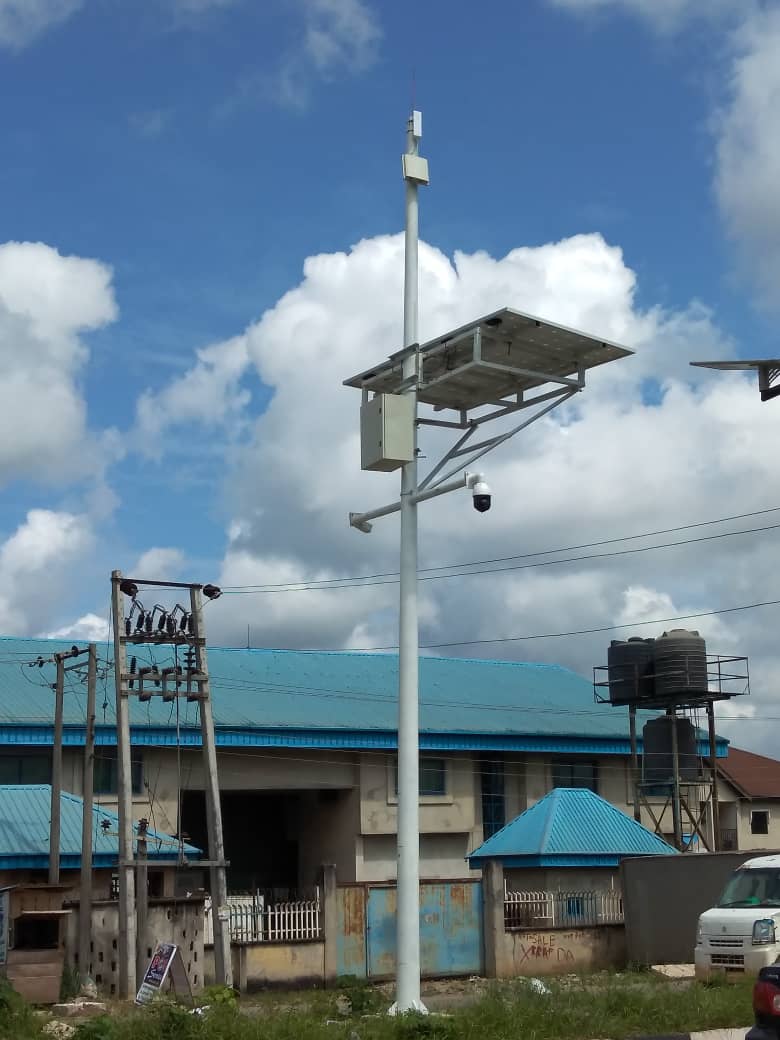
Solar-powered surveillance
This allows organizations to develop a coordinated security infrastructure instead of operating individual systems independently.
Implementation
The deployment was organized into several stages.
1. Site Assessment
The facility was assessed to understand its physical layout, surveillance requirements, network requirements and suitable equipment locations.
2. Surveillance Planning
Camera positions and viewing requirements were considered to provide appropriate coverage.
3. Network Design
Network connections, PoE requirements, cable routes and recording infrastructure were planned.
4. Equipment Installation
Cameras, network equipment, recording equipment and related infrastructure were installed.
5. System Configuration
Cameras, NVRs, network equipment and user access were configured.
6. Testing
The system was tested for:
Camera connectivity
Video quality
Recording
Playback
Night-time performance
Network communication
Storage
User access
Remote access where applicable
7. Training and Handover
Relevant users can be trained on monitoring, playback, incident review, video export and basic system operation.
Maintenance Requirements
A surveillance system requires ongoing maintenance to remain effective.
Recommended maintenance activities include:
Camera inspection
Lens cleaning
Camera alignment checks
Network testing
NVR inspection
Storage monitoring
Cable inspection
Firmware updates
User-access reviews
Remote-access checks
Fault diagnosis
Backup and configuration checks
Preventive maintenance can help identify problems before they affect surveillance coverage.
Data Protection and Privacy
CCTV deployment should also consider applicable privacy and data protection requirements.
Organizations should establish appropriate policies covering:
Purpose of surveillance
Camera placement
Access to footage
Storage and retention
Disclosure of recordings
Security of recorded information
Authorized users
Handling of requests involving recorded footage
Camera placement should also be carefully planned to avoid unnecessary intrusion into private areas.
Technology Used
The project demonstrates YasYum's capability across:
IP CCTV
NVR systems
PoE networking
Structured cabling
LAN infrastructure
Network security
Video monitoring
Remote surveillance
Backup power
Solar-powered CCTV
Access control integration
Electronic security infrastructure
YasYum Project Delivery Capability
YasYum can support CCTV and electronic security projects from initial assessment through deployment and ongoing support.
Our delivery model is:
Assess → Design → Supply → Install → Configure → Integrate → Test → Train → Maintain
This approach allows the surveillance system to be considered alongside the organization's ICT infrastructure, power requirements and wider security objectives.
Potential Applications
The solution can be adapted for:
Government facilities
Ministries and agencies
Schools and universities
Hospitals
Corporate offices
Warehouses
Estates
Hotels
Construction sites
Industrial facilities
Commercial properties
Remote facilities
Project Outcome
The completed solution provides a structured IP-based surveillance environment capable of supporting centralized monitoring, video recording and authorized investigation.
The architecture also provides a foundation for future expansion, including additional cameras, larger storage capacity, access-control integration, remote monitoring and backup-power solutions.
The project demonstrates YasYum's ability to combine CCTV, networking, security and infrastructure support into one coordinated deployment.
What This Case Study Demonstrates
Security: Structured surveillance and controlled access to video systems.
Connectivity: Network infrastructure designed to support IP-based surveillance.
Scalability: Architecture that can accommodate future expansion.
Integration: CCTV can work alongside access control, alarms, networking and backup power.
Maintenance: Ongoing technical support can help keep the infrastructure operational.
Practical Deployment: A structured process from assessment and design through installation, testing and handover.
Need a CCTV or Security Assessment?
YasYum Ltd provides CCTV, electronic security, ICT infrastructure, solar and technical maintenance solutions for organizations that require reliable and coordinated infrastructure.
YASYUM LTD
Integrated Technology, Security & Renewable Energy Solutions
Suite 38, Dumec Plaza, Area 1, Section 1, Abuja, FCT, Nigeria
Phone: 08036202908 | 08028720549
Email: info@yasyum.com
Technologies & Solutions
What was used.
Technologies, systems and platforms deployed in this project.
Related Projects
More from YasYum.
 CCTV & Security
CCTV & Electronic Security Infrastructure
CCTV & Electronic Security Infrastructure
 CCTV & Security
IP CCTV Surveillance & Monitoring System
IP CCTV Surveillance & Monitoring System
 Integrated Solutions
Integrated Technology, Security & Renewable Energy Infrastructure
Integrated Technology, Security & Renewable Energy Infrastructure
Have a Technology or Infrastructure Project?
Tell us what you need. Our team can assess the requirement, develop a practical solution and provide a clear implementation plan.