IP CCTV Surveillance & Monitoring System
IP CCTV Surveillance & Monitoring System
Overview
About this project.
Project Overview
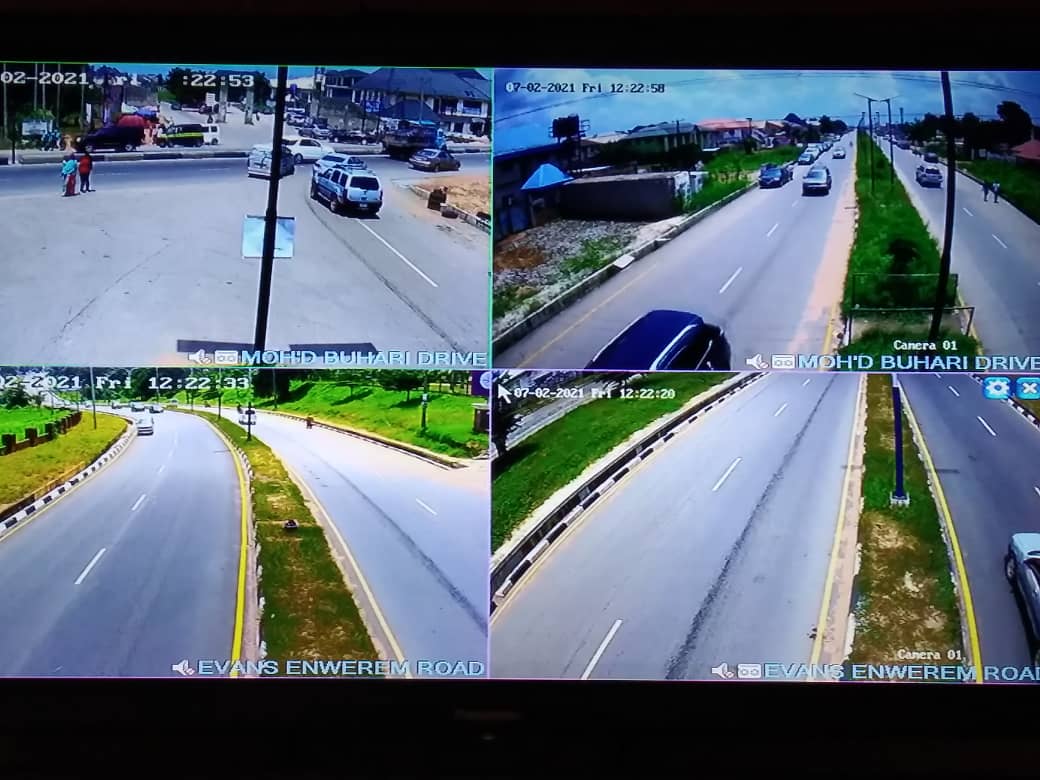
The IP CCTV Surveillance & Monitoring System is a network-based security solution designed to provide organizations with centralized video surveillance, recording and monitoring across offices, facilities, compounds and other operational environments.
Unlike traditional analogue CCTV systems, IP CCTV cameras communicate over a network, allowing video surveillance to become part of an organization's wider ICT infrastructure.
The solution combines IP cameras, network switches, structured cabling, PoE infrastructure, Network Video Recorders (NVRs), storage, monitoring workstations and secure remote access to create a centralized surveillance environment.
The system can be designed for government facilities, corporate offices, schools, hospitals, warehouses, hotels, residential estates, construction sites and other locations requiring continuous or scheduled security monitoring.
Key Objectives
The project is designed to help organizations:
Improve visibility across critical areas
Monitor entrances, exits and perimeter locations
Record security events for later investigation
Centralize camera monitoring
Improve security awareness
Protect buildings, equipment and other assets
Support existing security personnel
Enable authorized remote monitoring where required
Build a scalable surveillance infrastructure
Core Components
IP CCTV Cameras
Network-enabled cameras are deployed at strategically selected locations based on the required surveillance coverage.
Camera specifications can be selected according to the environment and purpose, including:
Indoor and outdoor cameras
High-resolution cameras
Infrared/night vision
Wide-angle cameras
Long-range cameras
PTZ cameras
Weather-resistant cameras
Motion detection capabilities
PoE Network Infrastructure
Power over Ethernet (PoE) switches can provide both network connectivity and power to compatible cameras through Ethernet cabling.
This helps simplify deployment and cable management while allowing cameras to connect directly to the organization's network infrastructure.
Structured Cabling
The project can include structured network cabling between cameras, network racks, switches and recording equipment.
Proper cable routing and labeling make the system easier to troubleshoot, maintain and expand.
Network Video Recorder
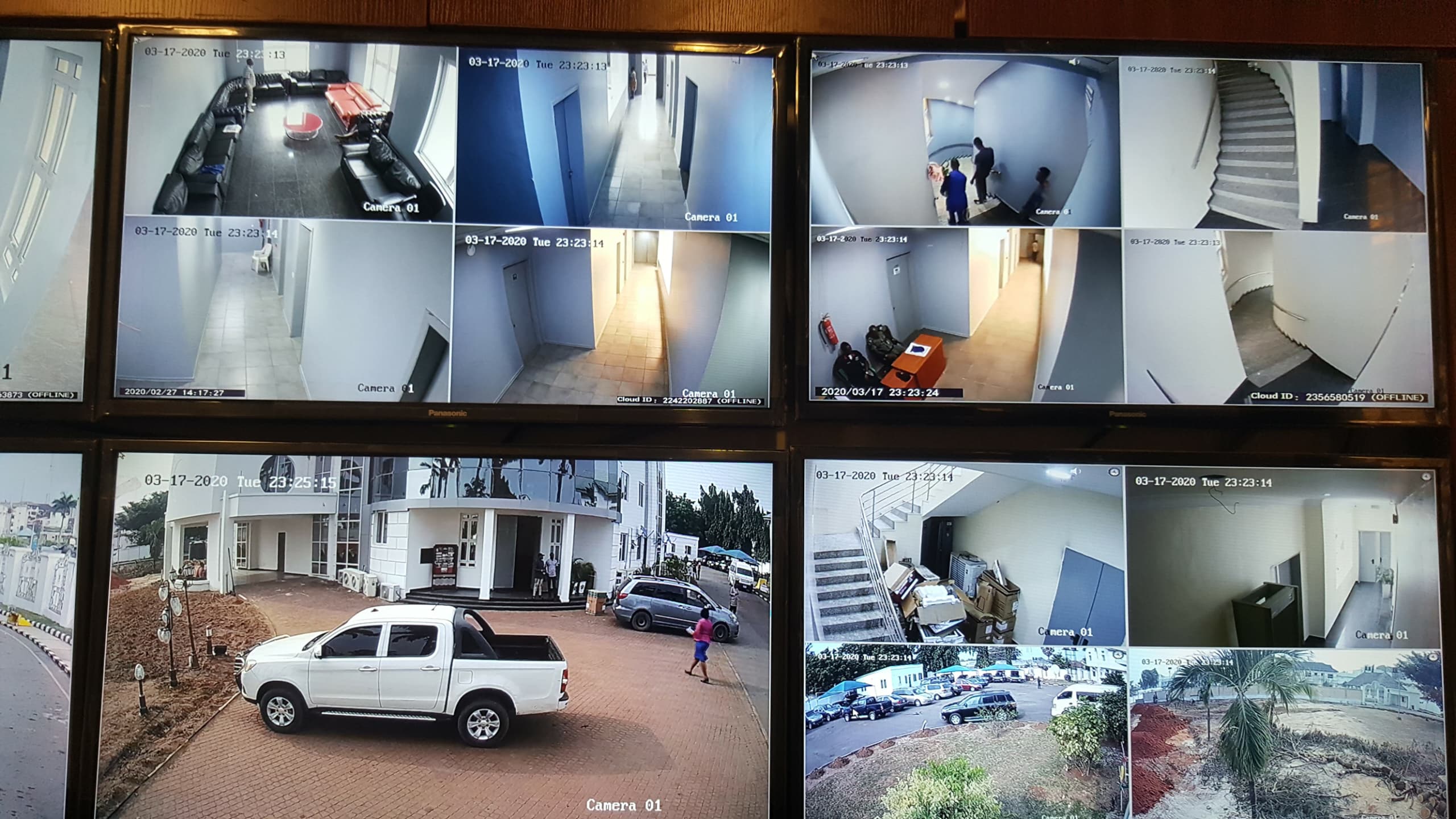
The NVR provides centralized video recording and management.
Depending on project requirements, the NVR can support:
Multiple camera channels
Continuous recording
Motion-based recording
Video playback
Search and retrieval
User management
Storage management
Camera health monitoring
Authorized remote access
Storage Infrastructure
Storage capacity is determined by factors such as:
Number of cameras
Camera resolution
Recording quality
Recording schedule
Compression
Retention period
The system can therefore be configured according to the organization's required video retention period.
System Architecture
A typical deployment follows:
IP Cameras → PoE Switches → Network Infrastructure → NVR/Recording Server → Storage → Monitoring Workstation
For larger facilities, additional network infrastructure can be introduced to connect multiple buildings or surveillance zones.
Where appropriate, CCTV can also be integrated with:
CCTV + Access Control + Alarm Systems + ICT Network + Backup Power + Remote Monitoring
Project Workflow
1. Site Assessment
The facility is assessed to understand:
Building layout
Entrances and exits
Perimeter
Security-sensitive areas
Existing network infrastructure
Available power
Lighting conditions
Potential camera mounting locations
2. Surveillance Planning
The required areas of coverage are identified and camera positions are planned to reduce blind spots.
Camera types and specifications are selected based on the specific requirements of each location.
3. Network Design
The network infrastructure is designed to support the required number of cameras and expected traffic.
This can include:
PoE switches
Network racks
Structured cabling
Fibre optic links
Network segmentation
Internet connectivity
Secure remote access
4. Equipment Installation
Cameras, switches, NVRs, storage systems and associated infrastructure are installed according to the approved design.
5. Configuration
The cameras and recording system are configured for:
IP addressing
Recording schedules
Motion detection
User permissions
Storage
Camera naming
Remote access where required
6. Testing
The completed system is tested to verify:
Camera coverage
Image quality
Night-time performance
Network connectivity
Recording
Playback
Storage
Remote monitoring
Power continuity
7. Training and Handover
Authorized personnel are trained on:
Live monitoring
Searching recordings
Exporting authorized footage
Basic troubleshooting
User management
System operation
Documentation can also be provided as part of project handover.
Security Considerations
Because IP CCTV systems are connected to networks, cybersecurity should be considered as part of the deployment.
Security measures can include:
Strong administrator credentials
Role-based user access
Network segmentation
Restricted remote access
Secure network configuration
Firmware updates
Firewall controls
Access logging
Regular maintenance
Backup and recovery planning
Only authorized personnel should have access to live feeds and recorded footage.
Integration With Renewable Energy
For locations with unreliable electricity, the CCTV system can be integrated with backup power infrastructure.
Depending on the site requirements, this may include:
UPS systems
Inverters
Battery storage
Solar power
Generator backup
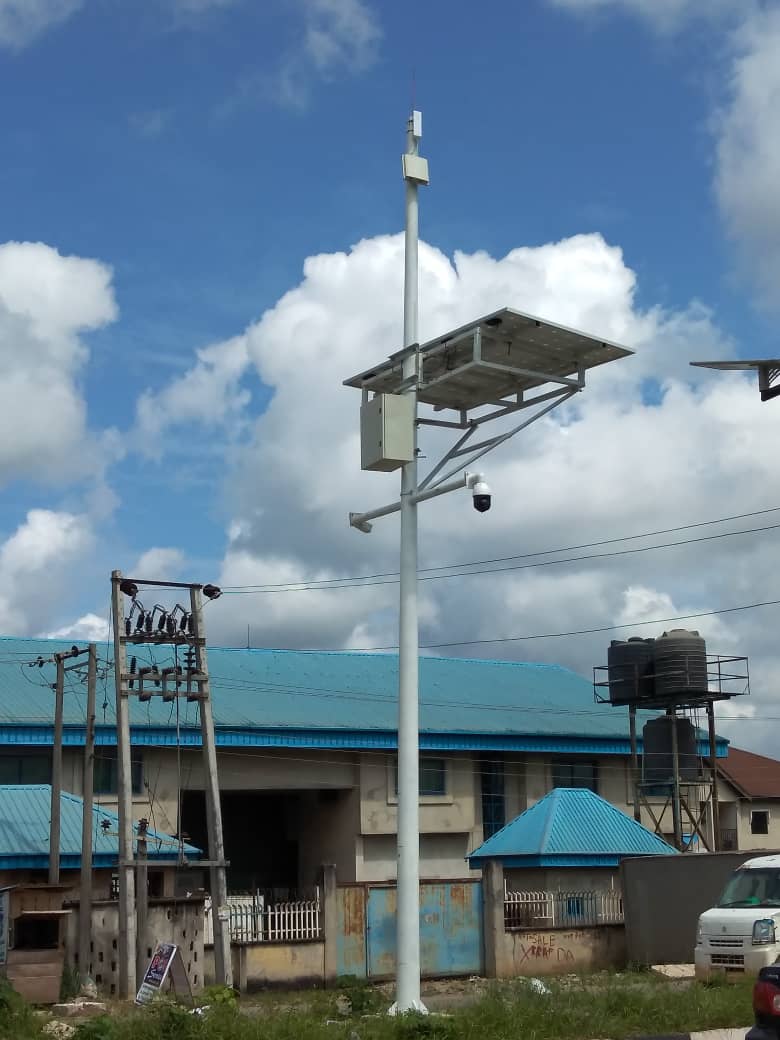
For remote locations without dependable grid electricity, the CCTV deployment can be designed as a solar-powered IP surveillance system.
This can combine:
Solar Panels + Battery Storage + IP Cameras + Network/Communication + Recording + Remote Monitoring
Remote Monitoring
Where secure communication infrastructure is available, authorized personnel can monitor selected cameras remotely.
This can be particularly useful for:
Multiple offices
Remote facilities
Large campuses
Construction sites
Warehouses
Distributed government facilities
Industrial locations
Remote access should be implemented with appropriate authentication and network security controls.
Applications
The IP CCTV system can be deployed across a wide range of environments.
Government Facilities
Monitoring offices, public facilities, entrances, perimeters and sensitive operational areas.
Educational Institutions
Schools, colleges and universities can use CCTV to monitor entrances, walkways, laboratories, administrative buildings, hostels and other authorized areas.
Healthcare Facilities
Hospitals and clinics can deploy surveillance around entrances, parking areas, corridors, stores and other appropriate locations.
Corporate Offices
Businesses can monitor entrances, reception areas, parking facilities, warehouses and restricted areas.
Construction Sites
Temporary or permanent CCTV installations can help monitor construction materials, equipment, access points and site activity.
Warehouses and Industrial Facilities
CCTV can provide visibility across storage areas, loading zones, production areas and facility perimeters.
Residential and Commercial Estates
IP surveillance can provide centralized monitoring of gates, roads, parking areas and common facilities.
Project Deliverables
Depending on the project scope, deliverables can include:
CCTV site assessment report
Camera placement plan
Network design
CCTV equipment supply
IP camera installation
PoE network infrastructure
Structured cabling
NVR installation
Storage configuration
Monitoring workstation
Remote monitoring configuration
Backup power integration
System testing
User training
Technical documentation
Maintenance and support plan
Maintenance & Support
A CCTV system requires continuous maintenance to remain effective.
YasYum can provide preventive and corrective maintenance covering:
Camera inspection
Lens cleaning
Camera alignment
Network testing
NVR inspection
Storage health checks
Cable inspection
Power system checks
Firmware updates
Fault diagnosis
System performance checks
Replacement of faulty components
YasYum Ltd Project Capability
This project demonstrates YasYum Ltd's ability to combine electronic security, ICT infrastructure, networking and renewable energy into a single deployment.
Rather than treating CCTV as an isolated installation, the solution can be designed as part of the organization's wider technology infrastructure.
Our capability covers:
Assessment → Design → Supply → Installation → Configuration → Integration → Testing → Training → Maintenance
This approach allows the surveillance system to be designed around the organization's facility, security requirements, network environment and future expansion needs.
Technology Areas
IP CCTV
Network Video Recorders
PoE Networking
Structured Cabling
LAN Infrastructure
Fibre Optic Networking
Network Security
Remote Monitoring
Video Management
Backup Power
Solar-Powered Surveillance
Access Control Integration
Project Outcome
The completed system provides an organization with a centralized IP-based surveillance infrastructure capable of supporting real-time monitoring, video recording and authorized investigation of security events.
The scalable architecture also provides a foundation for future integration with additional cameras, access control, alarm systems, ICT infrastructure and renewable energy systems.
YasYum Ltd
Integrated Technology, Security & Renewable Energy Solutions
Technologies & Solutions
What was used.
Technologies, systems and platforms deployed in this project.
Related Projects
More from YasYum.
 CCTV & Security
Concept
Case Study: IP CCTV Surveillance & Monitoring System
IP CCTV Surveillance & Electronic Security Infrastructure
 CCTV & Security
CCTV & Electronic Security Infrastructure
CCTV & Electronic Security Infrastructure
 Integrated Solutions
Integrated Technology, Security & Renewable Energy Infrastructure
Integrated Technology, Security & Renewable Energy Infrastructure
Have a Technology or Infrastructure Project?
Tell us what you need. Our team can assess the requirement, develop a practical solution and provide a clear implementation plan.